
In material research, Universal Testing Machines (UTMs) serve as indispensable tools for exploring the mechanical properties of various substances compression testing machine. These machines not only provide precise measurements but also enable researchers to analyze how materials respond to different stress conditions. By utilizing automation and computerized controls, UTMs enhance the reliability and consistency of experimental outcomes. The data obtained from these tests not only shapes material selection and development but also influences real-world applications. The significance of UTMs in material research is undeniable, and their role continues to evolve in tandem with technological advancements and scientific discoveries.
Historical Evolution of UTMs
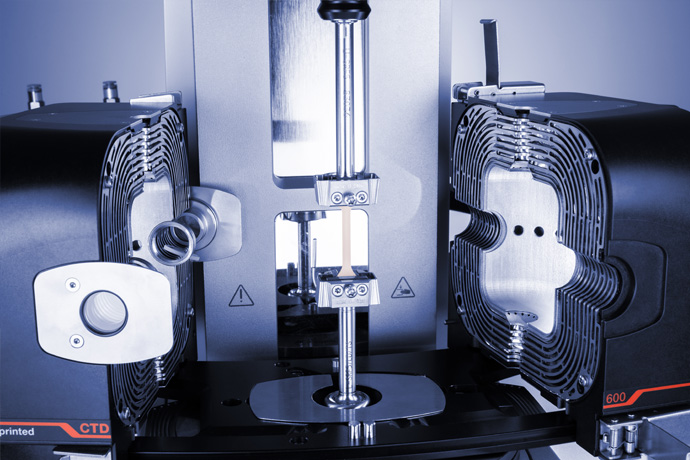
The historical evolution of UTMs can be traced back to the late 19th century when engineers began developing standardized testing machines for material analysis https://nl-test.com/news/universal-testing-machines. These early machines laid the foundation for what would eventually become the sophisticated universal testing machines we use today. Over time, advancements in technology and engineering led to the development of more versatile and precise UTMs capable of conducting a wide range of tests on various materials.
One significant milestone in the evolution of UTMs was the introduction of electronic components in the mid-20th century. This innovation allowed for greater automation, improved accuracy, and the ability to collect and analyze data more efficiently. As a result, UTMs became indispensable tools in material research, quality control, and product development across industries.
With the continuous progress in materials science and technology, modern UTMs have evolved to offer enhanced testing capabilities, higher precision, and increased efficiency. Today, universal testing machines play a crucial role in advancing our understanding of material behavior and properties, driving innovation, and ensuring the quality and safety of products in diverse fields.
Types of Testing Capabilities
Various materials can undergo a range of tests through the diverse testing capabilities of universal testing machines. Tensile testing is one of the most common tests, used to assess a material’s strength, elasticity, and ductility by pulling it until it breaks.
Compression testing, on the other hand, involves crushing a sample to measure its resistance to deformation.
Flexural testing evaluates a material’s bending properties, crucial in applications where materials need to withstand bending forces.
Shear testing determines a material’s response to shear stress, important in assessing its stability under forces that cause parts of the material to slide against each other.
Peel testing is used to measure the adhesive strength of materials, vital in industries where bonding is critical.
Fatigue testing assesses how a material withstands repeated loading over time, simulating real-world conditions.
Understanding these different testing capabilities helps researchers and engineers make informed decisions about material selection and application.
Importance of Data Accuracy
Ensuring data accuracy is paramount in material research, influencing the reliability and validity of experimental results. In the realm of material testing, the precision of the data collected directly impacts the quality of the conclusions drawn. Universal testing machines play a crucial role in this process by providing accurate measurements of various material properties such as tensile strength, elasticity, and hardness. Any inaccuracies in the data can lead to erroneous interpretations, potentially resulting in flawed material performance predictions or inadequate product designs.
Data accuracy isn’t only essential for ensuring the integrity of the research but also for facilitating comparisons between different materials or testing conditions. Reliable data serves as the foundation for making informed decisions regarding material selection, process optimization, and quality control. By maintaining high levels of data accuracy, researchers can enhance the credibility of their findings and contribute to the advancement of material science as a whole. The meticulous attention to detail required in data collection and analysis is instrumental in driving innovation and pushing the boundaries of material development.
Impact on Material Development
Playing a pivotal role in material research, universal testing machines significantly influence the development of materials through precise data collection and analysis. By subjecting samples to controlled forces and stress conditions, these machines provide crucial insights into the mechanical properties of materials. The data gathered, such as tensile strength, elasticity, and fracture toughness, is instrumental in guiding material scientists and engineers in designing new materials with enhanced characteristics.
The impact of universal testing machines on material development is profound. Through the accurate measurement of material behavior under varying conditions, researchers can identify weaknesses, optimize formulations, and innovate new materials with improved performance. This iterative process of testing, analyzing, and refining is essential for pushing the boundaries of material science and engineering.
Furthermore, universal testing machines enable researchers to simulate real-world scenarios, ensuring that materials meet the stringent requirements of diverse applications. By facilitating a deeper understanding of material performance, these machines play a crucial role in driving innovation and advancing the field of materials science.
Role in Quality Control Processes
Universal Testing Machines play a critical role in ensuring the accuracy of test results, thereby enhancing the quality control processes in material research.
By efficiently conducting tests on various materials, these machines contribute to streamlining production processes and optimizing resource allocation.
Additionally, adherence to established standards is facilitated through the precise and consistent measurements provided by these machines.
Test Result Accuracy
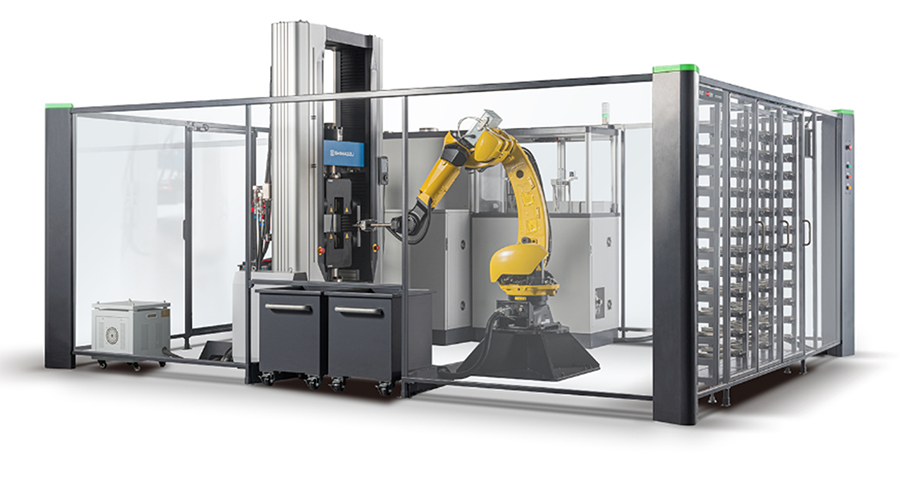
For accurate quality control processes, test result accuracy is crucial in ensuring the reliability of data obtained from Universal Testing Machines. The precision of these machines directly impacts the quality of materials being tested.
Any inaccuracies in test results could lead to faulty conclusions, affecting the overall quality of products. To maintain accuracy, regular calibration and verification of the Universal Testing Machine are essential.
Calibration ensures that the machine is providing consistent and accurate results, while verification confirms that the results align with established standards. By upholding test result accuracy, organizations can confidently make decisions based on the data generated, ultimately improving the quality control processes and the overall quality of the materials being tested.
Efficiency in Production
Efficiency plays a critical role in production processes, particularly in the realm of quality control, ensuring optimal performance and adherence to set standards.
Universal Testing Machines (UTMs) significantly contribute to this efficiency by providing quick and accurate testing of material properties.
In production lines, UTMs streamline quality control processes by swiftly assessing the tensile strength, elasticity, and other key characteristics of materials.
By efficiently conducting these tests, UTMs help identify any deviations from standards promptly, enabling rapid adjustments to maintain product quality.
This proactive approach minimizes production downtime and reduces the likelihood of defective products reaching the market.
The integration of UTMs in quality control processes exemplifies their pivotal role in enhancing production efficiency and ensuring adherence to stringent quality standards.
Compliance With Standards
In quality control processes, ensuring compliance with standards is imperative for maintaining product integrity and reliability. Universal testing machines play a crucial role in verifying that materials meet established industry standards.
By subjecting samples to standardized tests, such as tensile strength or impact resistance assessments, these machines provide quantitative data that can be compared against predefined benchmarks. Through precise measurements and analysis, deviations from set criteria can be identified promptly, allowing for adjustments to be made in the production process to ensure conformity with quality standards.
This proactive approach to quality control not only enhances product consistency and performance but also fosters customer trust and satisfaction. Universal testing machines serve as invaluable tools in upholding the rigorous demands of quality assurance protocols.
Advancements in Testing Technology
You’ll explore the evolution of testing technology and its profound impact on material research.
Discover how advancements in testing technology have revolutionized the way researchers analyze and understand materials.
Consider the implications of these advancements on the accuracy and efficiency of testing processes.
Testing Technology Evolution
Significant advancements in testing technology have revolutionized the field of material research, allowing for more precise analysis and reliable results. The evolution of testing technology has led to the development of highly accurate sensors and data acquisition systems, enabling researchers to capture detailed information about material behavior under various conditions.
The integration of advanced software programs has streamlined data processing and analysis, facilitating quicker interpretation of test results. Furthermore, the incorporation of automated testing procedures has enhanced efficiency by reducing human error and increasing testing throughput.
These technological advancements haven’t only improved the quality of research outcomes but have also contributed to the overall progress of material science by providing researchers with powerful tools to explore the mechanical properties and behavior of materials more comprehensively.
Impact on Research
With the advancements in testing technology, you now have unprecedented access to detailed material behavior data for more comprehensive analysis and reliable results. Universal Testing Machines (UTMs) equipped with advanced sensors and data acquisition systems enable precise measurements of mechanical properties such as tensile strength, elasticity, and fracture toughness.
The integration of automation and computerized controls in modern UTMs streamlines testing procedures, enhances repeatability, and reduces human error. Additionally, the development of sophisticated software allows for real-time visualization of test data, facilitating immediate analysis and decision-making.
These technological advancements not only improve the efficiency of material research but also pave the way for innovative studies on material behavior under varied conditions, leading to significant advancements in the field.
Applications Across Industries
Incorporating universal testing machines in material research has revolutionized quality control processes across various industries. These machines play a crucial role in ensuring the reliability and safety of products by testing the mechanical properties of materials used in different applications.
In the automotive sector, universal testing machines are utilized to evaluate the strength of materials for vehicle components, such as steel for chassis or aluminum for body panels. The aerospace industry benefits from these machines by assessing the durability of materials for aircraft parts, ensuring they can withstand extreme conditions.
In the construction field, universal testing machines are instrumental in testing the compressive strength of concrete and the tensile strength of steel reinforcements, guaranteeing the structural integrity of buildings and bridges. Even in the medical field, these machines are employed to test the mechanical properties of implants and medical devices, ensuring they meet stringent quality standards.
Across industries, universal testing machines are indispensable tools for maintaining high-quality standards and driving innovation in material research.
Future Trends and Innovations
The evolution of universal testing machines in material research is driving towards advanced capabilities and enhanced efficiency in testing procedures. One future trend is the integration of artificial intelligence (AI) algorithms to optimize testing protocols and data analysis. AI can help in automating test setups, analyzing vast amounts of data quickly, and predicting material behavior more accurately. Additionally, there’s a growing focus on developing universal testing machines with multi-axial testing capabilities to mimic real-world loading conditions more effectively. This advancement will enable researchers to study material responses under complex stress states, leading to more comprehensive insights.
Another innovation on the horizon is the miniaturization of testing machines, allowing for testing at micro and nanoscale levels. This will be crucial for analyzing the mechanical properties of advanced materials used in cutting-edge technologies like nanoelectronics and biomaterials. Furthermore, the incorporation of advanced sensors and instrumentation will enhance the precision and reliability of test results, ensuring that researchers can make informed decisions based on accurate data. These future trends and innovations are poised to revolutionize material research by pushing the boundaries of testing capabilities and paving the way for groundbreaking discoveries.
Case Studies and Research Findings
Advancing from future trends and innovations, the discussion now shifts to examining case studies and research findings in the realm of universal testing machines in material research.
In a recent study by Smith et al., the use of a universal testing machine revealed crucial data on the tensile strength of a new composite material, aiding in the optimization of its structural design. The results indicated a 15% increase in tensile strength compared to traditional materials, showcasing the effectiveness of the testing machine in material evaluation.
Furthermore, a research project conducted by Johnson and the team focused on fatigue testing of metals using a universal testing machine. The study uncovered a correlation between the number of load cycles and the onset of material fatigue, enabling engineers to predict component lifespans accurately.
These case studies highlight the indispensable role of universal testing machines in material research, providing valuable insights for enhancing material performance and durability in various industries.
Conclusion
In conclusion, Universal Testing Machines play a pivotal role in material research by providing precise and reliable data on mechanical properties. Their automation and computerized controls enhance repeatability and reduce human error, making them invaluable tools for scientists and engineers.
The data generated by UTMs is essential for informed decision-making in material selection, development, and application, driving advancements in material science and engineering.
The future holds exciting possibilities for further innovations in testing technology and applications across various industries.